TMJ / TMD & Muscle Myalgia Treatment
TMJ disorder is pain and dysfunction of the jaw muscles and temporomandibular joints. Most cases are treated successfully without surgery. Dr. Peterson — a general dentist whose practice has focused on TMJ and orofacial pain for over 40 years — diagnoses the cause of the pain with a careful examination and objective EMG muscle testing, then builds a conservative treatment plan for the specific case.
A careful diagnosis first — then treatment
Orofacial pain disorders involve the masticatory musculature and associated structures — the head, neck, jaw, teeth, and temporomandibular joints. The exact cause of TMJ pain is often a combination of factors, such as arthritis, jaw injury, or an improper relation of the jaw to the skull. That is why diagnosis comes before anything else.
The evaluation includes:
- A thorough health and pain history
- A careful, gentle examination of the head, neck, and jaw, including muscle palpation
- A complete oral examination
- EMG testing — electromyography measures the electrical state of the muscles of mastication, so incoordination and abnormal muscle function can be monitored and measured objectively, not guessed at
Treatment is then matched to the diagnosis — from orthotic appliances and muscle therapy to bite correction — always beginning with the most conservative approach that can resolve the case. When the condition stems from a workplace injury, treatment proceeds under workers' compensation.
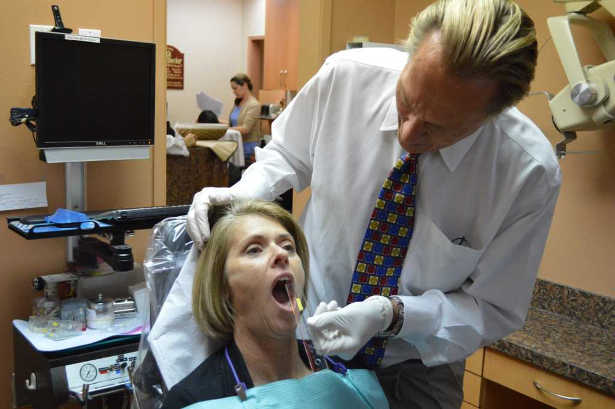
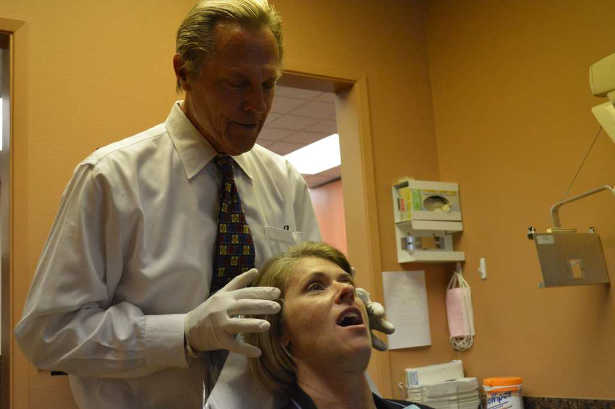
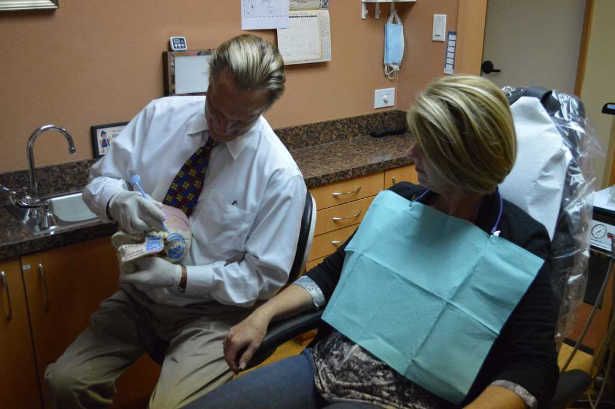
EMG (electromyography) testing aids diagnosis and treatment planning by objectively measuring jaw-muscle function.
TMJ questions, answered
What is TMJ disorder (TMD)?
TMJ disorder — also called TMD or temporomandibular dysfunction — is pain and dysfunction involving the jaw muscles and the temporomandibular joints, which connect your jawbone to your skull. It can affect the jaw, face, head, neck, and teeth.
What are the signs of a TMJ disorder?
Common signs include jaw pain or tenderness, clicking or popping when you open your mouth, frequent headaches, pain around the ear, difficulty or discomfort when chewing, and a jaw that locks open or closed.
Can TMJ problems come from a work injury?
Yes. A blow to the jaw, a fall, or other workplace trauma can injure the temporomandibular joints and jaw muscles directly — and industrial injuries to the teeth and bite can secondarily strain the joints and muscles. When the condition arises out of employment, evaluation and treatment are covered under workers’ compensation.
What is muscle myalgia, and how is it treated?
Myalgia is pain originating in the muscles themselves — in the jaw, the muscles of mastication. Dr. Peterson treats muscle myalgia with objective EMG measurement of muscle function, orthotic appliances, and muscle therapy, beginning with the most conservative approach that fits the diagnosis.
Does TMJ treatment require surgery?
Rarely. Most TMJ disorders respond to conservative, non-surgical care — such as orthotic appliances, muscle therapy, and bite correction. Surgery is considered only when conservative treatment has not resolved a structural joint problem.
Is TMJ treatment covered by workers’ compensation?
When the TMJ injury or aggravation is work-related and the claim is accepted, treatment is covered through workers’ compensation. Dr. Peterson also performs QME, AME, and IME evaluations where a TMJ condition’s industrial causation is in dispute.